Live Production and Streaming Studio Strategies for Growth
Getting to 500k YT Subscribers and so much more...

My company, Brick House Media (bhmedia.co) produces and manages a custom client set as a live streaming studio in the modern wellness space, and on our way to 500k Subscribers on Youtube! Here’s a look behind the curtain, the strategies that have worked well for us from Production to marketing to share with you all, we hope it helps. We tried to be as specific and detailed as possible here.
√ Weekly, we stream live to over 5,000 private subscribers in the clients community, but hardly ever to Youtube live directly. We only use that option for promotions or evergreen content as top of funnel marketing. Of the 5K subs, about 10-15% watch our content live and the rest watch the replays. We give them 2 weeks to watch recent classes and lifetime access for courses they buy.
√ We record 3 live classes per week as; early evening on Mondays, mid-days on Wednesday and mornings on Fridays… to be able to reach a global audience in different timezones. Workshops and courses we either film and edit beforehand or go live on Sunday afternoons mostly. Recordings are a one-hour expert-led movement practice, and then a live 30 minute Q&A via Zoom with audience questions. The audience is primarily 50 to 80 year olds who desire to have access to the expert 1:1 and this satisfies that need. A key differentiator for us.
√ We built a complex NDI networked control system with 4 static POE cameras into a Tricaster (not our favorite) from a nearby control room. We have 2 camera operators who can swap roles as 1 is a technical producer and a content producer (myself) on set for all our recordings. We also document each movement as Notion notes for a later short edit, will explain below.
√ – We kept multiple Sennheiser boom mics in the studio, but found our best audio success with a wireless over ear Madonna mic lav on talent, as movement is involved. Batteries and good devices continue to be a pain for us, as boom mics capture too much room sound and picked up our loud neighbors. Audio is recorded in the mix and also as separate ISO tracks in Logic.
√ We have about 5-6 Mac computers running and 1 PC; 1 in the studio for Zoom rooms, 1 as the controller, 1 for Logic audio recordings, 1 for camera records, a Macbook and iPad controller for lighting and secondary audio controls. We found it best to divide up the tasks over different computers and have a networked rack for other processes. Hence the need for our tech producer. Pinpointing one tech issue can often be a needle in the networked haystack issue.
√ About 2/3 of our audience are watching live and interacting on Zoom apps from their homes. In the control room and studio we’re using the ‘Zoom Rooms’ app as the main controller and add in a Vimeo feed that goes to our private community channel. As well as, using OBS for Vimeo live events and for backup stream feeds in case of crashes (rarely happens). We secured very fast fiber network at 1-3GB that does cost a small fortune to have piped in from our street, dam you Comcast.
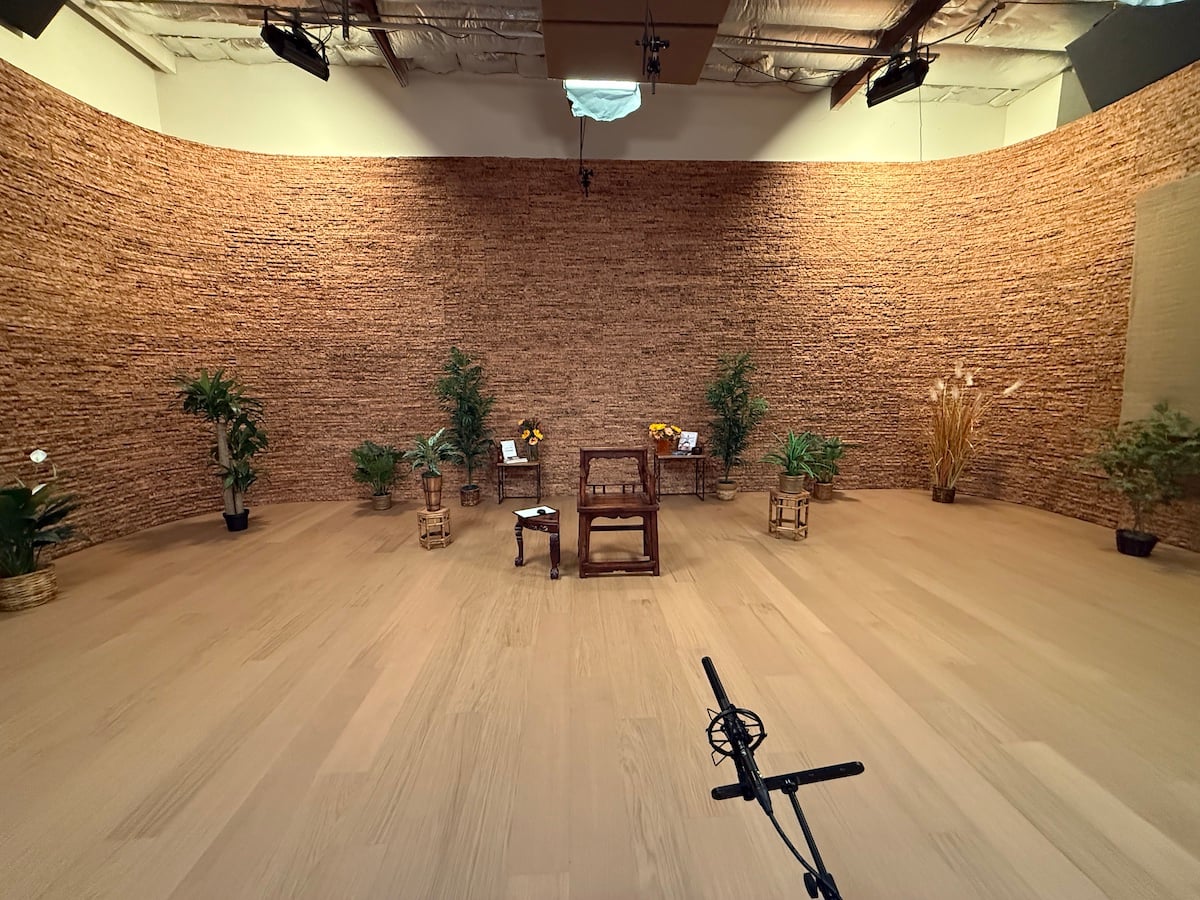
√ Weekly we shoot evergreen content either in our custom 270º cork wall 1,000 square foot studio, or out in nature. Currently using 2 Sony A7 and FX series cameras, and a DJI drone addition to make it feel more cinematic. We often only use natural lighting and some LEDs occasionally.
√ Leverage not one but two remote video editors; Texas and a Brit living nomadically in Brazil. Both are skilled in Adobe Premier and Davinci Resolve for different projects. They download the large 4 camera files, our mix and separate audio ISOs, plus Zoom recordings when applicable. We leverage Suite app for large file transfers that editors can proxy edit on and Google Drive for raw and edited file management, and Vimeo for our final public files. Yeah paying these storage companies a small fortune now per year to keep all these large files ready for us. We’re researching larger D.A.M. for better organization so editors can find and search all for ease of usage and more repurposing needs. Our local studio team is also editors but as backups.
√ We now organize our projects in Notion, prior it was Asana boards, communicate on Slack channels and rarely use email internally as a team. Using the database functions in Notion have been a great helpful game changer for us this year. Adding AI functions into the mix with Claude.
√ For on-location productions we often leverage our amazing natural surroundings of the Northern California – Santa Cruz areas as shooting spots; giant redwoods, open beaches, flowery cliffs, forest river areas and access to retreats locally. It offers amazing content.
√ The Youtube content is mostly short form now adding many more vertical Shorts, as well as 10, 20 and 30 minute movement routines that perform best at about 8-15 minutes. Recently we had our first viral post on Instagram reaching over 3M views (was nothing special) but added little impact as IG followers. It all helps with brand awareness and top of funnel campaigns.
√ On Youtube we deeply research video topics that are high searchability but with low results, then optimize the video descriptions for SEO, keywords and A-B-C test our thumbnails and titles. This later part is recent just this year and working quite well for growth and views. It’s a decade old channel so we have lots of history to help and Covid was a huge help to growing our base! So many people to the paid programs mention finding it first on Youtube or a friend sending them a link. Sharing is caring.
As I was writing this all out now, I now realize we’re doing quite a lot and this is not a simple step-by-step process, sorry. I do hope some of these insights help you build up your own channels and our production example helps too. We’re always learning, testing new processes and being experimental with it all.
Feel free to DM me and learn more about what we do, this is Brick House Media… building experts and leaders a solid media foundation for growth bhmedia.co.